

In an interview with Christian Burkhard, Bernhard Thalmayr, Chairman of the water cooperative, tells us all about “water in Anthering”. He also gives us interesting insights into other important areas such as water supply in Austria, global development and climate change, as well as the responsible use of water as a resource.
But first the answer to a question that may be on the tip of some people’s tongues: What does the chairman of the water cooperative actually do? Well, the area of responsibility is very diverse and covers the entire range of local drinking water supply. It starts with the monitoring and maintenance of the supply facilities (wells and springs, elevated tanks, pipeline network, mechanical equipment, etc.), continues with administrative tasks such as bookkeeping, invoicing, construction negotiations, statutory meetings and member support, through to pipeline construction, repairing burst pipes, creating new connections, replacing water meters and exploring new water sources. The primary objective is to supply members with the best drinking water at the lowest possible cost. Accordingly, the employees of the water cooperative are available around the clock.
Facts about Anthering
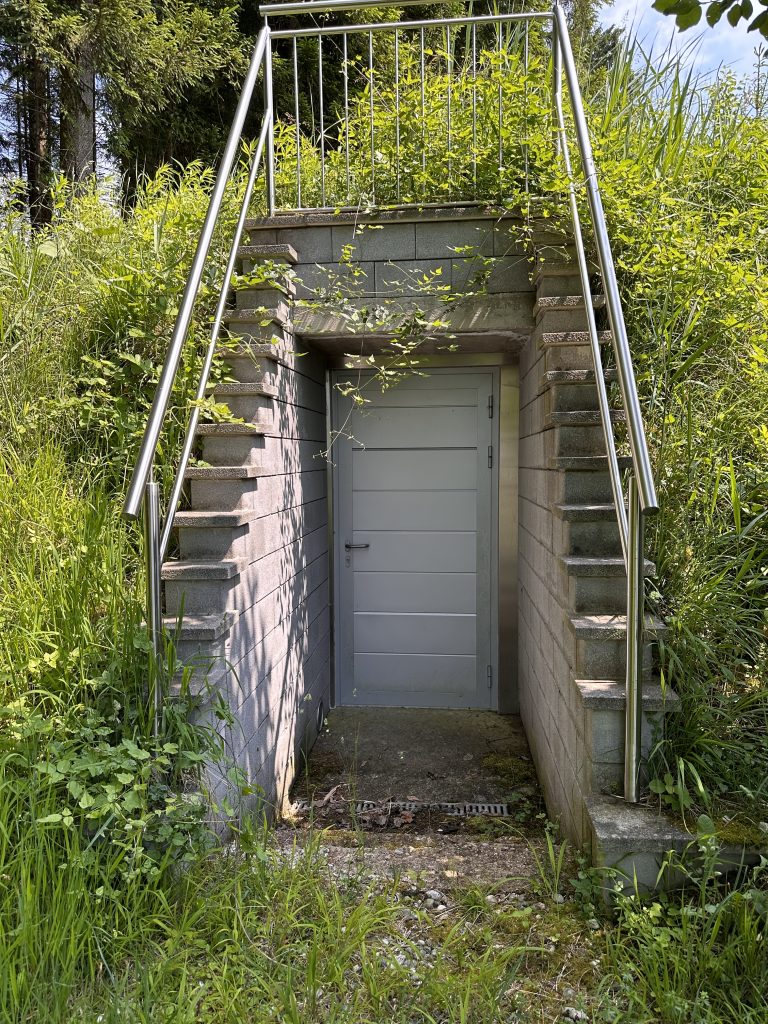
Anthering obtains its drinking water mainly from the two high zones of Trainting and Hupping and from the groundwater well in the Antheringer Au. These water sources are fed by groundwater bodies for which a water conservation area has now been designated. The spring water is fed into an elevated tank with a capacity of 1,000 m3 and distributed via 33 km of main pipes and 12 km of house connection pipes.
Around 165,000 cubic meters of water are currently consumed in Anthering every year. That is around 500 m3 per day. This consumption has remained relatively constant in recent years, only the distribution has changed: Whereas it used to be the cheese dairy that consumed the most water, today it is inns, agriculture and larger commercial enterprises.
Climate change and its impact on the water supply in Austria
For a long time, the issue of “drinking water” was considered relatively relaxed in Austria and we are still one of the “blessed” countries where you can drink tap water everywhere without any problems. Nevertheless, the increasing drought of recent years has left its mark: Wells have to be drilled deeper and springs recaptured. Soil sealing and drainage prevent sufficient rainwater from seeping into the ground and thus completely replenishing the groundwater reserves.
At the same time, the chairman sees great potential for savings. For example, we still use drinking water for the toilets. It would definitely make sense to switch to service water here. Smaller pool systems without regular or automatic monitoring also pose a risk of increased consumption: As soon as the water tips over due to a lack of oxygen, it is simply drained and the pool is refilled. Filling the pool in this way can easily consume 15,000 to 28,000 liters of drinking water.
He is equally critical of water abstraction from rivers and lakes for irrigation. Instead, he recommends the construction of rainwater harvesting systems and would like these to be a legal requirement for new buildings – both private and commercial. This could also reduce the risk of flooding.
The chairman sees the expansion of water protection areas in Austria as another important step for the future. In contrast to water protection areas, protected areas are not only limited to zones around drinking water extraction points, but can also include other areas in order to ensure the protection of groundwater. This should be secured under water law in order to safeguard our groundwater reserves for the future.
Bernhard Thalmayr has his hands full as chairman of the water cooperative. Fortunately, he is one of those people who pursue their profession with interest and dedication and approach their responsible task with the necessary foresight.
Thank you very much for the detailed interview!